Your keyword strategy is dead. Not dying. Dead.
That rank tracker you check every Monday? It’s measuring a battlefield that keeps shrinking. And that #1 position you spent eighteen months fighting for? It now sits underneath an AI answer that resolves the whole query before anyone even thinks about scrolling.
Here’s where we actually are in 2026: 68% of Google searches end without a single click. Not to your site. Not to anyone’s site. The search just… ends. Meanwhile, the smartest brands quietly stopped playing the rankings game a while ago. They’re not optimizing for search engines anymore. They’re engineering decision moments on every platform where choices actually get made.
And while most businesses were still fussing over meta descriptions, their customers moved on. They check TikTok for restaurants and products. Reddit for the honest, unfiltered take. YouTube when they want to see how something works. ChatGPT when they’re researching or comparing options. At Moksh Digital, this is the shift we now build every strategy around: not where you rank, but where your buyer actually decides. Search didn’t die. It scattered. And the brands who figured out where it went are winning decisions their competitors never even see happening.
The Problem: Google Became the Destination, Not the Doorway
For twenty years, the deal was simple. Rank high, get the click, convert the visitor. Everyone understood the rules.
That deal is broken.
SparkToro and Similarweb ran the clickstream data for early 2026, and the numbers are blunt. 68.01% of US Google searches ended without a click. Two years ago it was 60.45%. That’s the fastest acceleration this trend has ever seen. Out of every 100 searches today, fewer than 33 produce any click at all, and only about 28 of those go to an organic result.
Even the searches that don’t end quietly often just loop back into Google. People search, read the answer on the results page, and search again. Google answers the question and keeps everyone inside its walls. Ten years ago, roughly 45% of searches were zero-click. Now it’s 68%. This road only goes one direction.
Not all queries are dying equally
Here’s where it gets interesting for strategy, because zero-click behavior isn’t uniform at all.
Informational queries, your “what is” and “how to” content, now run about 74% zero-click. That content has become a citation play, not a traffic play. Transactional queries are a different animal. Only about 31% go zero-click, because people still click when they’re ready to buy, book, or sign up.
Device matters too. Mobile searches sit around 77% zero-click. Desktop hovers near 50%. If your audience lives on their phones, the click economy has already collapsed for you. You just may not have noticed yet.
The takeaway: stop running one playbook for every query. Top-of-funnel content earns influence inside the results page now. Bottom-of-funnel content still earns visits. Those are two different jobs, and they need two different strategies.
AI Overviews and AI Mode: The Structural Break
Featured snippets nibbled away at clicks for a decade. AI compressed that decade into a few months.
AI Overviews: the answer sitting above your ranking
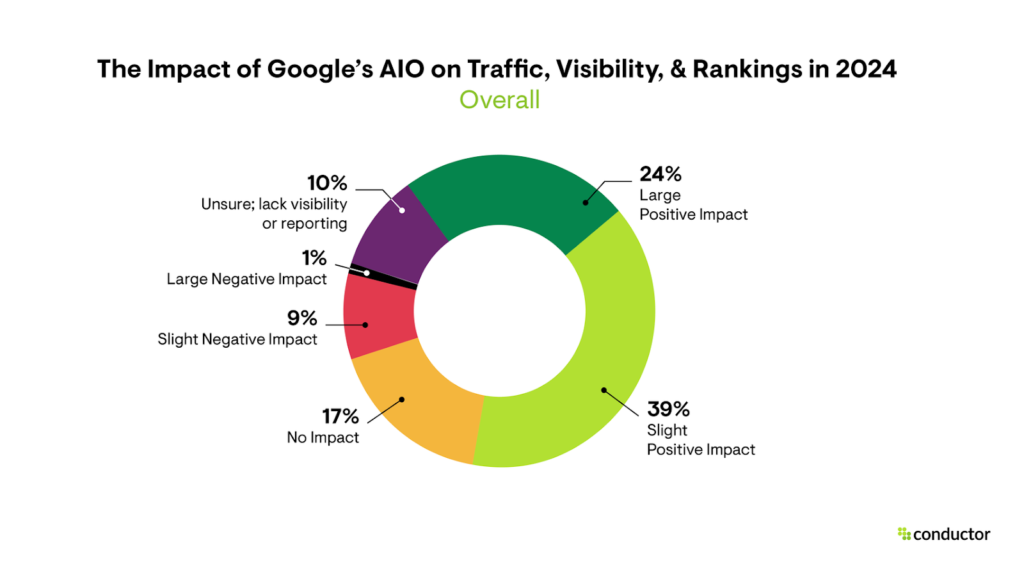
Google’s AI Overviews now show up on more than 20% of searches, and the coverage keeps spreading vertical by vertical. When one appears, the math gets ugly fast. Click-through rates drop by nearly 60%. The zero-click rate jumps to roughly 83%, compared to about 60% on a normal results page.
And here’s the number that should keep publishers up at night. Pew Research found that only about 1% of AI Overview views produce a click on a cited source. Read that again. The answer satisfies the searcher, and the source that provided it almost never earns the visit. On informational head terms, CTR collapsed from 1.76% to 0.61%. A 61% drop.
AI Mode: the 93% zero-click surface
Then there’s AI Mode, Google’s conversational search. It’s the fastest-adopted surface in the company’s history, already past 1 billion monthly users, with query volume more than doubling every quarter. Inside AI Mode, 93% of searches end without a click to any external site.
Ninety-three percent. If your business runs on organic traffic, that number is not a trend. It’s a warning.
But here’s what the doom headlines miss
Two findings flip the story, and almost nobody talks about them.
First, the clicks that survive are better clicks. Someone who reads an AI summary and still clicks through arrives pre-educated and genuinely interested. Those visitors convert around 23% better than traditional search traffic. Fewer people, higher intent.
Second, branded queries actually gained ground. When an AI Overview surfaces a clear brand answer with a recognizable source, branded query CTR rose roughly 18%. Think about what that means. Brand strength is now a ranking asset, and AI amplifies it. Fewer visitors. Better visitors. And a growing premium on being the brand the AI names by default.
AEO, GEO, and LLM Optimization: The New Alphabet of Search

Walk into any marketing meeting in 2026 and you’ll hear a soup of new acronyms. AEO. GEO. LLMO. AI SEO. Some people use them interchangeably. They shouldn’t, because each one targets a different surface, rewards different tactics, and gets measured differently. Here’s the plain-English breakdown.
AEO: Answer Engine Optimization
AEO is about becoming the direct answer. It grew out of featured snippets, People Also Ask boxes, and voice assistants, and it now covers Google’s answer boxes and the extractable parts of AI Overviews.
The playbook is directness over cleverness. Match your headings to the exact questions people ask, then answer them immediately in one or two clean sentences. Structure content for extraction: FAQs, tables, bullet lists, tight definitions. Add schema markup, especially FAQPage and HowTo. Write in plain, precise language, because ambiguity kills extractability.
The success metric is simple: did you win the answer box, the snippet, or the spoken response? If someone asks their phone “what is slab nesting” and your definition comes back, that’s AEO working.
GEO: Generative Engine Optimization
GEO goes one level deeper. It’s the practice of getting your brand cited inside the answers that generative engines write: AI Overviews, ChatGPT search, Perplexity, Gemini, Copilot. The term came out of a 2023 research paper from Princeton, Georgia Tech, and Allen Institute researchers, and their findings are still the most practical guide in the field.
They tested content modifications across 10,000 queries and measured what actually increased citation probability. The results should reshape how you write:
- Adding expert quotes lifted citation probability by around 41%. Models treat quotation marks and attribution as a credibility signal.
- Adding statistics lifted it by roughly 30%. Numbers signal factual density.
- Adding inline citations to authoritative sources also lifted it by about 30%. Content that cites its own sources builds a chain of trust.
- Keyword stuffing dropped citation probability by about 9%. The models detect unnatural text and penalize it.
Notice what’s happening here. The tactics that win AI citations are the exact tactics that make content genuinely good. Quotable data, named experts, cited sources, clear structure. GEO isn’t a trick. It’s rigor, made machine-readable. One more mindset shift GEO demands: citation is not winner-take-all. An AI answer typically cites three to five sources, and being one of them is the win. You’re no longer fighting for a single #1 slot. You’re working to become a credible corroborating voice the model keeps reaching for.
LLMO: Large Language Model Optimization
LLMO zooms out from individual pages to your brand’s entire footprint in the model’s knowledge. It asks a bigger question: when someone types your category into ChatGPT, Claude, or Gemini, how does the model represent you? Does it know who you are, what you do, and why you’re credible?
This is entity work, and it’s slower and more structural than AEO or GEO:
Build consensus about your facts. LLMs favor information that appears consistently across their training data and retrieval sources. If your service list says one thing on your website, another on your directory listings, and a third on LinkedIn, the model loses confidence and may omit you entirely rather than risk being wrong. Your name, locations, services, and core claims need to match everywhere. Think of it as the consensus engine effect: consistency is what lets the AI triangulate you with confidence.
Feed the machine structured signals. An emerging standard called llms.txt works like a sitemap for AI crawlers, a curated index of your most important pages with brief descriptions. Not every platform reads it yet, but early adopters gain a structural head start. At minimum, check your robots.txt isn’t accidentally blocking AI crawlers from your best content.
Play the long game. The entity profile you build today shapes how models represent you 12 to 24 months from now, as they retrain and update. In practice, businesses doing this work typically see measurable citation increases in tools like Perplexity within 3 to 6 months, and AI Overview inclusion within 2 to 4 months once quality signals are established. Each citation and each authoritative mention compounds.
Know your engines, because they don’t behave the same
Different AI platforms source and cite differently, and the details matter:
- Google AI Overviews disproportionately cite pages that already rank in the top 10 organic results. Strong traditional SEO is your entry ticket. FAQ and HowTo schema, short definitions, and visuals improve inclusion odds.
- ChatGPT often lifts structured formats like bullet points and FAQs almost verbatim. It also runs “query fan-out,” breaking your prompt into one to three background searches. Find those searches, build dedicated pages targeting them, and you’ll show up in its answers.
- Perplexity shows its searches openly, always includes citations, and rewards freshness, authority, and original data. It leans heavily on Bing’s index, which means Bing SEO quietly matters again.
- Microsoft Copilot leans on LinkedIn for B2B queries. If you sell to businesses, your LinkedIn presence now feeds an answer engine.
- Gemini analyzes multimodal content, so creating graphics design carry real weight.
So where does “AI SEO” fit?

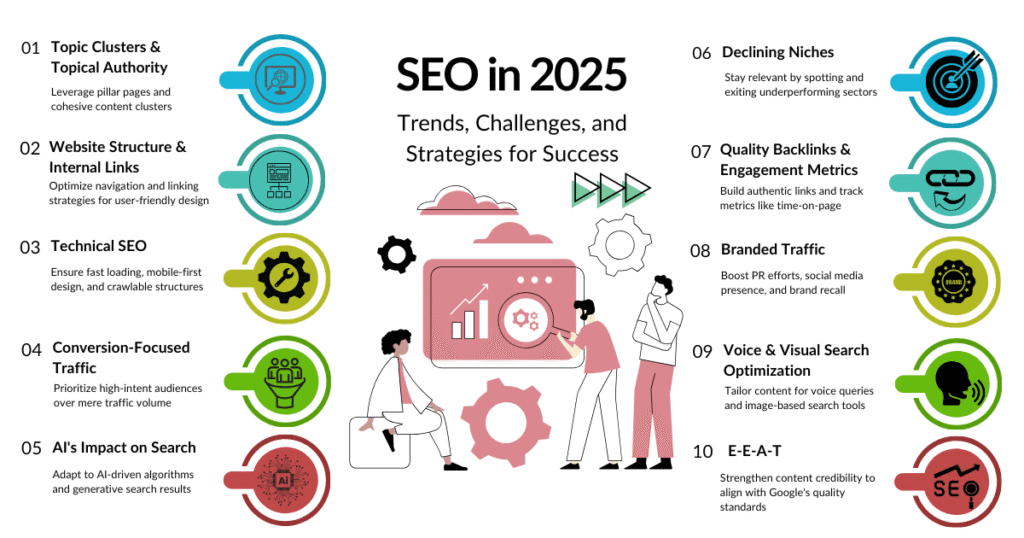
AI SEO is the umbrella. Some in the industry now call it Search Everywhere Optimization: traditional SEO plus AEO plus GEO plus LLMO plus social search on Reddit and TikTok. Whatever label you prefer, the operating principle is the same, and it’s the most reassuring truth in this whole shift:
You are not building four separate assets. You are building one asset with four payoffs.
A page with a crisp definition up top, question-matched headings, a comparison table, quotable statistics, expert attribution, and clean schema can rank in Google, win the featured snippet, get pulled into an AI Overview, and earn a Perplexity citation, all at once. SEO gets you into the pool of pages the AI reads. AEO makes your content easy to extract. GEO makes the AI choose you over competitors. LLMO makes sure the model knows who you are in the first place.
One warning before we move on. The GEO gold rush has attracted operators promising guaranteed AI placement. Nobody can guarantee that. Anyone who says otherwise is selling you something that doesn’t exist.
Where the Searches Went: The Multi-Platform Decision Journey
The lazy version of this story is “TikTok replaced Google.” It makes a great headline. It’s also wrong.
The real story, backed by Adobe’s 2026 consumer research, is more useful: people now split different types of searches across different platforms, and each platform owns a stage of the decision.
What the 2026 data actually shows
49% of US consumers have used TikTok as a search engine, up from 41% in 2024. Among Gen Z, it’s 65%, and 77% of them use TikTok for product discovery. So yes, the behavior is real and growing.
But when consumers were asked which platforms are actually most helpful for search, Google still came first at 85%. Then Reddit at 29%. Then ChatGPT at 26%, YouTube at 24%, and TikTok trailing at 16%.
The quieter, more important number in that study: 14% of consumers now say they’d rely on ChatGPT over Google. And that preference holds steady across every generation, from Gen Z to boomers. It’s double the share who say the same about TikTok. TikTok gets the headlines. ChatGPT is the structural shift.
The same person, five different searches
Picture the actual behavior. Someone searches “best skincare routine for oily skin” on TikTok, then twenty minutes later types “dermatologist near me” into Google. Same person. Same day. Two platforms, two jobs.
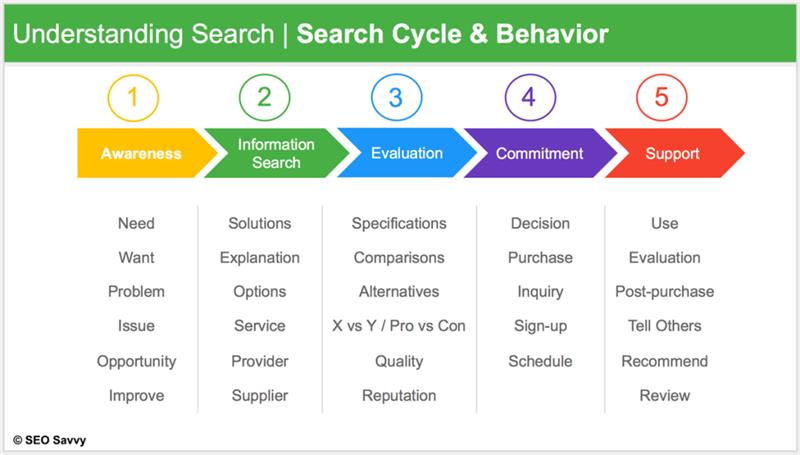
That’s the pattern everywhere now. Discovery happens on Social media like- TikTok and Instagram. Validation happens on Reddit and YouTube. Research and shortlisting happen in ChatGPT, Perplexity, and Gemini. High-stakes, local, and transactional searches still go to Google. The final gut-check before purchase happens in Amazon reviews.
So the right question is no longer “how do we rank?” It’s “which platform does our buyer open at each stage of the decision, and are we actually there when they do?”
Decision Moments vs. Search Moments: The Psychology Shift
The mechanics changed because the psychology changed first.
Traditional search was exploratory. You typed keywords, scanned ten blue links, opened a few tabs, and made up your mind. Today’s search is validational. People arrive with a preference already half-formed by their feeds, their group chats, their communities, and their AI conversations. They’re not searching to discover something new. They’re searching to confirm what they already suspect.
That flips the entire optimization target. Old SEO tried to get you found by strangers. Decision engineering tries to make you the confirming answer when someone checks whether their instinct is right.
The trust signals that now outrank ranking signals
Three things move decisions in 2026, and none of them show up in a rank tracker.
Peer validation. A genuinely positive mention in a Reddit thread with 200 comments will influence more purchase decisions than your #1 ranking ever did. Reddit remains one of Google’s most visible domains for comparison queries, and buyers trust it precisely because brands can’t fully control it.
AI citation authority. When ChatGPT or an AI Overview names your brand in a recommendation, that’s an endorsement no ad budget can buy. Ahrefs analyzed 1.9 million AI Overview citations and found AI answers pull heavily from content that already demonstrates real authority and clean structure.
Cross-platform consistency. Modern buyers verify fast. TikTok discovery, quick Reddit check, AI confirmation, Amazon reviews, all inside ten minutes. One weak link anywhere in that chain and the decision dies quietly. You’ll never even know you lost it.
Platform-Specific Decision Codes
Every platform runs on its own psychology. Copying one strategy across five platforms is like speaking one language in five countries and wondering why nobody responds.
Reddit: raw authenticity or nothing
Redditors smell promotional content instantly, and the community has zero patience for it. What works is slower and harder: genuine expertise, transparent participation, and answers so thorough that people discover your credibility on their own. Never lead with your product. One honest expert answer outperforms fifty branded posts, every time.
TikTok and Instagram: make them feel something
People come to TikTok search for the short video format, the storytelling, the interactivity. Video tutorials are the most preferred content type at 61%, with product reviews close behind at 45%. A 15-second clip of your product solving a relatable problem beats any polished five-minute explainer. Show, don’t tell. And remember TikTok indexes your captions, your on-screen text, and your spoken words, so optimize all three.
AI platforms: earn the citation
Everything from the AEO, GEO, and LLMO section above applies here. The short version: write self-contained answer blocks of 40 to 60 words, back claims with statistics and expert quotes, implement complete schema markup, keep cornerstone content fresh with quarterly updates, and publish original data the AI can’t find anywhere else. Original research is the single strongest citation magnet, because you become the source everyone else has to reference.
Amazon: reviews are the ranking
Buyers skip your product description and go straight to reviews. A product with 500 authentic reviews beats a genuinely better product with 50. Review velocity, review recency, and answered questions are your real ranking factors here.
YouTube: depth wins
95% of Gen Z adults use YouTube, and consumers rank it more helpful for search than TikTok. Long-form tutorials and honest comparisons feed YouTube search, Google’s video results, and increasingly the AI answers themselves. It’s the rare platform where depth still gets rewarded.
The 2026 Playbook: From Rankings to Decision Engineering
Enough diagnosis. Here’s the treatment plan, in five phases.
Phase 1: Map your decision moments
Find out where your customers actually validate choices, not where you assume they search. Ask ChatGPT and Perplexity your category’s core buying questions and see who gets named. Track your brand mentions across Reddit, TikTok, and YouTube. Mine your Amazon and G2 reviews for the objections people really have. Then split your keyword universe into two buckets: citation plays and click plays.
Phase 2: Build authority where it counts
Pick two or three platforms where your buyers validate decisions most often, and go deep. An authentic presence on two platforms beats a promotional presence on ten. Learn each platform’s native code from the section above, and commit for quarters, not weeks. This is the part most brands quit too early.
Phase 3: Layer AEO, GEO, and LLMO onto your SEO foundation
Do not rip out your SEO. AI Overviews cite pages that already rank well, and Perplexity pulls from Bing’s index, so traditional SEO is the foundation everything else stands on. Then stack the new layers: AEO structure so your answers extract cleanly, GEO tactics (statistics, expert quotes, inline citations) so generative engines choose you, and LLMO consistency so the models know exactly who you are. One asset, four payoffs.
Phase 4: Connect the trust signals
Build signals that reinforce each other. Encourage happy customers to share their experience where their peers already look. Get to know community moderators, niche creators, and the industry voices your buyers actually follow. Publish original research so good that Reddit threads, YouTube creators, and AI systems all end up citing you as the source.
Phase 5: Measure what actually matters
Traffic and rankings are secondary indicators now. Your new dashboard should track AI citation frequency across ChatGPT, Perplexity, Gemini, and AI Overviews. Brand mention volume and sentiment across Reddit, TikTok, and YouTube. Branded search growth, which is the cleanest proxy for cross-platform influence. Conversion rate of your surviving search traffic, which should climb as the low-intent clicks disappear. And your share of voice inside AI answers for your category’s top 50 buying queries. A practical habit: prompt the major AI tools with your key buying queries every month and log who gets named. It’s manual, but it’s the truest visibility report you’ll get right now.
What Still Deserves Old-School SEO
Before you fire your SEO team, a reality check. Three categories still reward classic SEO in 2026, and they reward it well.
Branded searches, where owning your own name now earns an AI-amplified CTR lift. Local queries, where map packs and business profiles still drive real calls and foot traffic. And high-intent transactional queries, where only about 31% go zero-click because buyers still need somewhere to complete the purchase, And with fewer organic clicks to go around, paid search campaigns are how you guarantee presence on the transactional queries that still convert.
One more thing worth remembering. AI answers pull extensively from what already ranks well. Your website may no longer be the destination for most searches, but it’s still the source material powering your presence everywhere else. Keep it authoritative, structured, and current. It’s not the storefront anymore. It’s the warehouse everything ships from.
Read Also: From Traffic to Revenue: Turning Your Website into a Lead Engine
The Future Belongs to Decision Engineers
The future of search visibility isn’t about gaming algorithms. It never really was. It’s about earning trust in the exact moments where decisions happen.
While your competitors chase yesterday’s rankings, you can build authority across the full decision ecosystem: cited by AI through GEO and LLMO, extracted as the answer through AEO, validated on Reddit, discovered on TikTok, proven on Amazon, confirmed on Google. Gartner predicted a 25% drop in traditional search volume by 2026, and it arrived right on schedule. In some sectors, the decline runs far deeper.
The shift is irreversible. The window to adapt is open right now. The brands that move first will own decision moments their competitors can’t even measure.
Want to know where your buyers are actually making decisions- Get a platform visibility SEO audit
Frequently Asked Questions (FAQs)
1. What is AI SEO, and how is it different from traditional SEO?
AI SEO is the practice of optimizing content for AI-powered search experiences such as Google AI Overviews, ChatGPT, Perplexity, Gemini, and Microsoft Copilot. Unlike traditional SEO, which focuses on search rankings, AI SEO also helps your content become the answer or citation within AI-generated responses.
2. What are zero-click searches, and why do they matter?
Zero-click searches happen when users get the information they need directly from the search results without visiting a website. As AI-generated answers become more common, businesses need to optimize for visibility, brand mentions, and citations—not just website clicks.
3. What is the difference between SEO, AEO, GEO, and LLMO?
Traditional SEO improves search rankings and organic traffic. AEO (Answer Engine Optimization) helps your content become the direct answer to user questions. GEO (Generative Engine Optimization) increases the chances of your content being cited by AI platforms, while LLMO (Large Language Model Optimization) strengthens your brand’s visibility across AI models like ChatGPT and Gemini.
4. How can I optimize my website for Google AI Overviews and ChatGPT?
To improve visibility in AI search, create clear, well-structured content with direct answers, FAQs, expert insights, original research, and schema markup. Building topical authority and maintaining consistent brand information across the web also improves your chances of being referenced by AI systems.
5. Is keyword research still important for SEO in 2026?
Yes. Keyword research is still valuable, but it should focus on user intent instead of keyword density. Modern SEO combines keyword optimization with helpful content, structured data, topical authority, and AI-friendly formatting to improve visibility across both search engines and AI platforms.
6. What is Search Everywhere Optimization?
Search Everywhere Optimization is a strategy that expands beyond Google by optimizing content for platforms where people research and make decisions, including ChatGPT, Google AI Overviews, Reddit, YouTube, TikTok, Perplexity, and social media. The goal is to increase brand visibility wherever your audience searches.
7. Does traditional SEO still work after the rise of AI search?
Absolutely. Traditional SEO remains the foundation for online visibility, especially for branded, local, and high-intent transactional searches. Strong SEO also improves the likelihood that your content will be selected and cited by AI search engines.