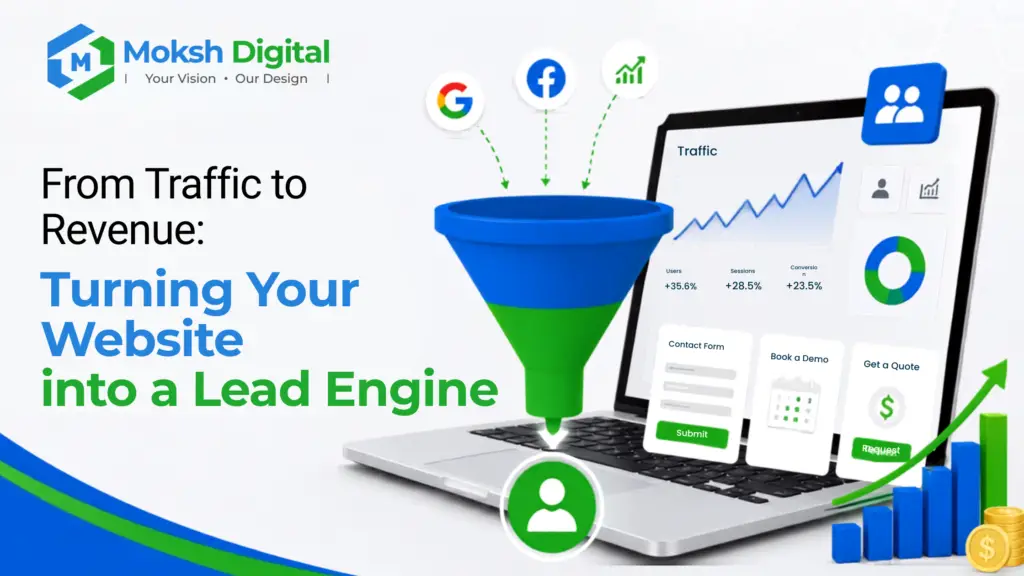
From Traffic to Revenue: Turning Your Website into a Lead Engine

From Traffic to Revenue: Turning Your Website into a Lead Engine

Your website is getting traffic, but your sales team isn’t getting enough leads. That’s where many businesses lose potential revenue without realizing it. The problem isn’t always getting more visitors—it’s converting the ones you already have. This Moksh Digital blog explains how a website lead generation system and a digital lead engine can turn website traffic into qualified leads using better conversion strategy, buyer intent, automation, and the right performance metrics.


The Real Problem 

Most websites are doing exactly what they were built to do—generate traffic. The numbers look impressive. Impressions increase, page views grow, and website sessions rise every month. Yet the sales pipeline barely changes because traffic alone does not generate revenue. This isn’t a marketing problem. It’s a conversion architecture problem.

Many businesses spend heavily on SEO, paid advertisement, and content marketing, but very few visitors actually become leads. In fact, the average B2B website converts less than 2% of its visitors into leads. That means most of the people you worked hard to attract leave without contacting you or taking the next step.

High-performing businesses think differently. Instead of building digital brochures, they create website lead generation systems that capture buyer intent, build trust, and guide visitors toward action. They treat their website as a digital lead engine, not just an online presence.

The difference is simple. A brochure website tells visitors what you do. A digital lead engine shows them exactly what to do next.


Buyer Intent Over Volume

Buyer Intent Over Volume

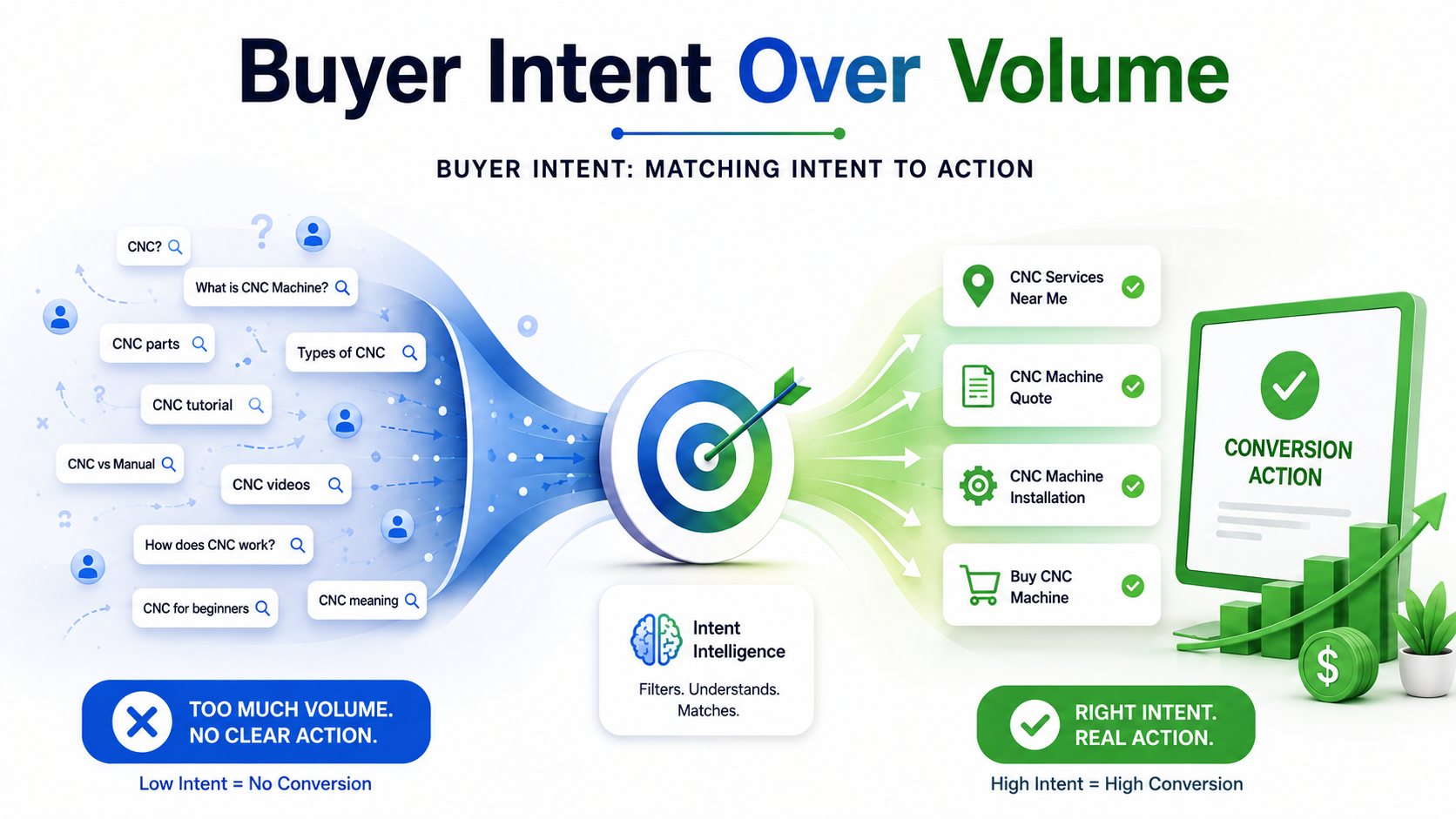
More traffic doesn’t always mean more business. The quality of your visitors matters far more than the quantity. Imagine two people visiting your website. One searches for “What is CNC programming?” The other searches for “CNC programming services for countertop fabricators near me.” Both appear as website visitors, but only one is actively looking to hire a service. Visitors who use buyer intent keywords, high-intent search queries, and service-specific searches are much closer to making a decision. They already know what they need—they’re simply choosing the right provider.

A strong lead generation strategy focuses on matching content with search intent. Educational content helps people learn, comparison pages help them evaluate options, and service pages make it easy to request a quote or book a consultation. When your content matches what visitors are looking for, conversions happen naturally. Visitors find the answers they need, trust your business, and take action with much less hesitation.


Conversion Infrastructure

A successful website is much more than good design. It is built with conversion-focused UX, clear messaging, persuasive CTAs, trust signals, lead capture forms, and website optimization for leads. The first few seconds matter. Visitors should immediately understand what your business does, who you help, and why they should choose you. Clear messaging always performs better than clever wording. Every page should focus on one clear goal. Rather than offering multiple actions, guide visitors toward a single next step, whether that’s requesting a quote, booking a consultation, or contacting your team.

Trust is equally important. Client logos, testimonials, certifications, and case studies reassure visitors that they are making the right choice. Placing these trust signals near your contact forms or call-to-action buttons often increases conversions. Your lead capture forms should also be simple. Ask only for the information your sales team truly needs. Short forms are easier to complete and usually generate more qualified leads.

Finally, every page should connect to the next stage of the customer journey. Blog posts should link to relevant service pages, and service pages should make it easy for visitors to get in touch. Strong internal linking supports both SEO Solutions and lead generation.

Automation & Scale

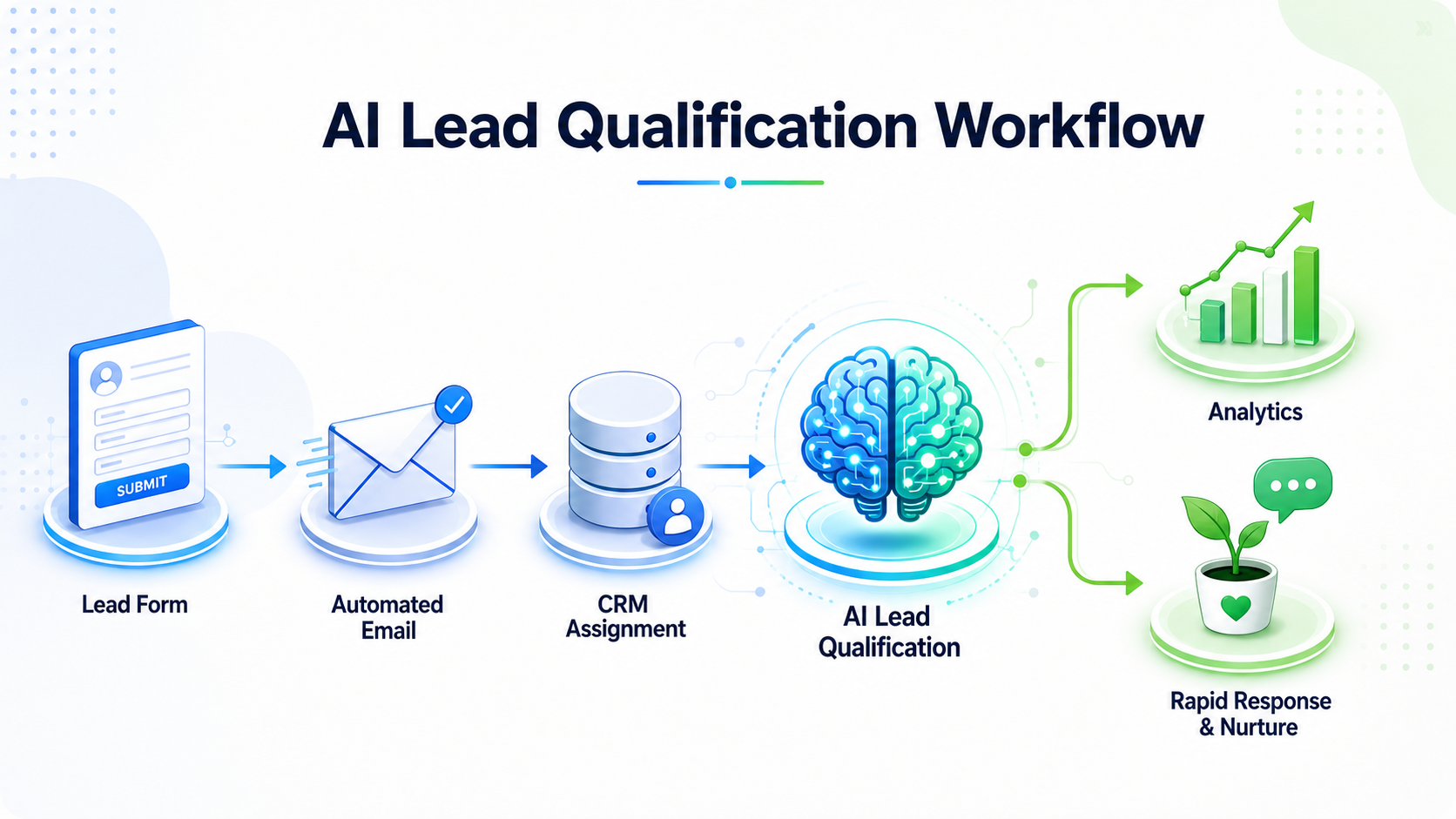
Capturing a lead is only the first step. Responding quickly is what turns interest into opportunity. A modern digital lead engine uses automated lead generation, AI lead qualification, sales automation, and lead nurturing to respond instantly.

As soon as someone submits a form, automated emails can confirm their inquiry, CRM systems can assign the lead to the right team member, and lead scoring can identify the prospects most likely to convert.

Behavioral tracking also helps prioritize leads. Someone who visits your pricing page several times is usually more interested than someone reading a single blog post. Automation helps your sales team focus on these high-value opportunities first.

With the right systems in place, businesses create a predictable sales pipeline without increasing their workload.

Automation & Scale


Measure Metrics that drive Revenue

Traffic reports are useful, but they don’t tell the whole story. Instead of focusing only on page views and website sessions, businesses should track the numbers that directly impact growth.

Your visitor-to-lead conversion rate shows how well your website converts traffic. Lead-to-opportunity rate measures lead quality. Cost per qualified lead tells you how efficiently you’re generating prospects, while pipeline value shows how much revenue your website is actually influencing. These metrics provide a much clearer picture of your website’s performance than traffic alone.

Also Read: The Power of a Digital Voice: Why Smart Brands Choose Strategy Over Noise


The Upgrade Isn’t More Traffic

If your website isn’t consistently generating qualified leads, it’s limiting your business growth.

Every month, businesses invest in SEO, advertising, and content marketing to attract visitors. Without a strong conversion strategy, much of that investment is lost because visitors leave without taking action.

A true digital lead engine combines website lead generation, conversion strategy, lead generation services, and digital growth infrastructure to turn visitors into customers.

The goal isn’t simply to increase traffic—it’s to build a website that generates measurable revenue, supports your sales team, and grows your business every day.

 Let’s turn your website into a revenue engine  not a reporting tool.


Frequently Asked Questions (FAQs)

1. What is a digital lead engine?

A digital lead engine is a website built to consistently attract, engage, and convert visitors into qualified leads. It combines SEO, conversion optimization, automation, and lead nurturing to generate measurable business growth.

2. How can I turn website traffic into qualified leads?

You can convert website traffic into qualified leads by creating high-intent content, optimizing landing pages, using clear CTAs, simplifying lead forms, adding trust signals, and implementing a strong website lead generation strategy.

3. Why is my website getting traffic but not generating leads?

High traffic doesn’t always mean high conversions. Common reasons include targeting the wrong audience, weak calls-to-action, poor user experience, slow page speed, lack of trust signals, or content that doesn’t match buyer intent.

4. What is website lead generation?

Website lead generation is the process of converting website visitors into potential customers through forms, downloadable resources, consultation requests, live chat, and other conversion-focused elements.

5. Why is buyer intent important in lead generation?

Buyer intent helps attract visitors who are actively searching for your products or services. Targeting high-intent keywords usually results in better conversion rates and higher-quality leads.

6. What makes a website conversion-friendly?

A conversion-focused website includes clear messaging, strong CTAs, fast loading speeds, mobile responsiveness, simple lead forms, trust signals, relevant content, and an intuitive user experience.

7. How does marketing automation improve lead generation?

Marketing automation enables instant follow-ups, lead scoring, CRM integration, email nurturing, and faster responses, helping businesses convert more leads while reducing manual effort.

Blogs

Explore our upcoming and past events designed to spark ideas, share expertise, and help businesses grow through meaningful conversations.

Social Media Search Engine: How to Rank on TikTok, Instagram, YouTube & Facebook

Social Media Search Engine: How to Rank on TikTok, Instagram, YouTube & Facebook

The Power of a Digital Voice: Why Smart Brands Choose Strategy Over Noise

The Power of a Digital Voice: Why Smart Brands Choose Strategy Over Noise

The Death of Keywords: Why SEO Masters Are Building Decision Engines, Not Search Rankings

The Death of Keywords: Why SEO Masters Are Building Decision Engines, Not Search Rankings

Ready to work with us ?