


1. Is social media really replacing Google as a search engine?
Not replacing, but splitting the traffic. Nearly one in three consumers now start their search on social platforms instead of Google, and that number passes 50 percent for Gen Z. Businesses need visibility on both to stay in front of buyers.
2. Which social media platform should my business optimize for search first?
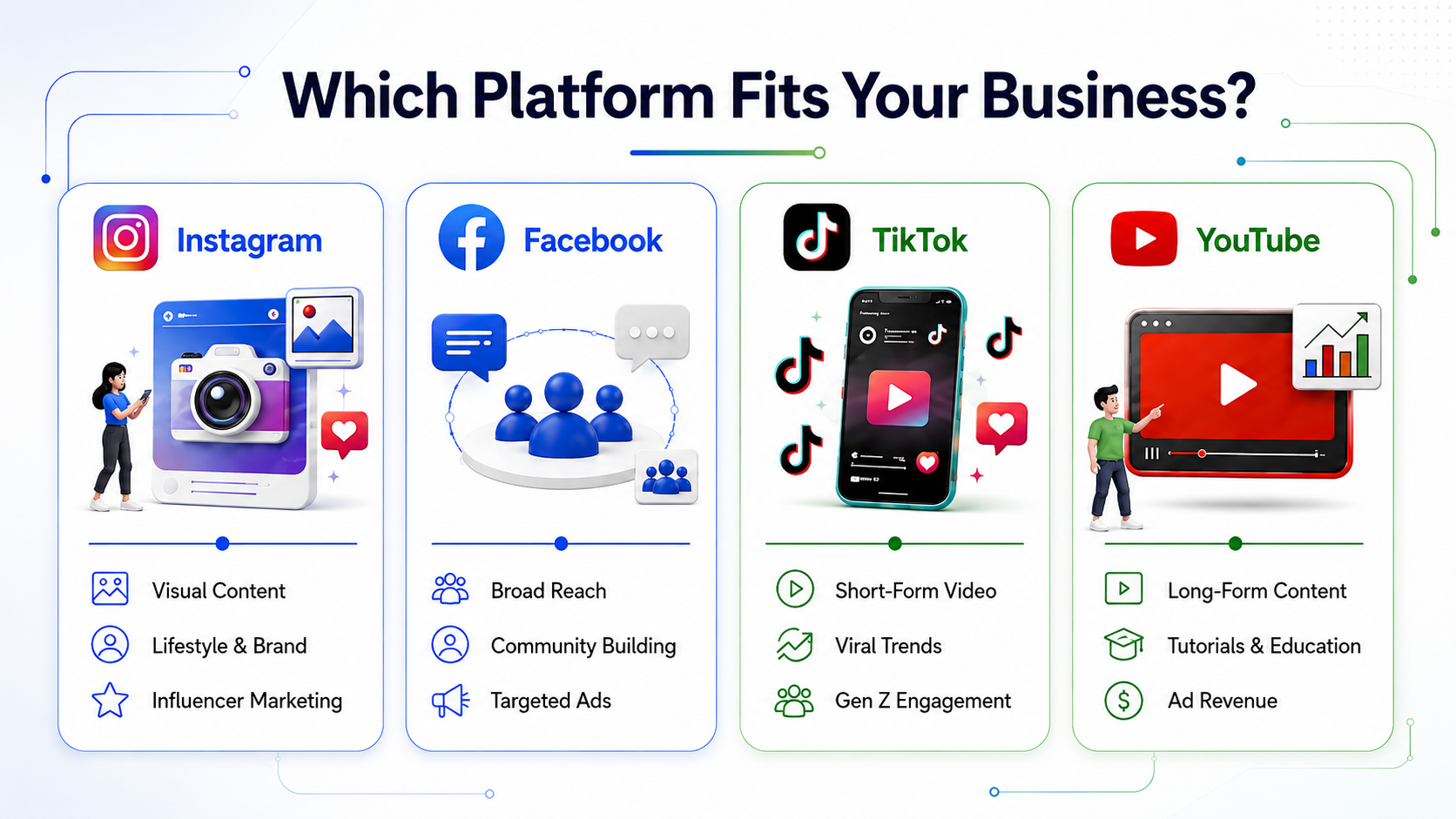
Start with the platform where your customers already search. Local service businesses usually see the fastest results on Facebook and Instagram, while product-based and how-to businesses win faster on TikTok and YouTube. Dominating one platform beats posting on four.
3.How long does it take to rank in social search?
Weeks, not months. Niche searches on TikTok can rank in 2 to 4 weeks and Instagram in 4 to 8 weeks because competition is thinner than Google. YouTube takes longer, around 2 to 3 months, but rankings there can drive leads for years.
4. What is social SEO?
Social SEO is the practice of optimizing your social media profiles and content to rank in platform search results. It includes keyword-rich captions, searchable bio fields, alt text, location tags, and spoken keywords in videos. The goal is to appear when buyers search for your product or service instead of scrolling past you.
5. Does social media content help my Google rankings too?
Yes. Google now indexes public Instagram posts and short-form videos in its search results, and social profiles often rank on page one for brand and local searches. Optimized social content gives you two chances to get found instead of one.
6. How is social search different from traditional SEO?
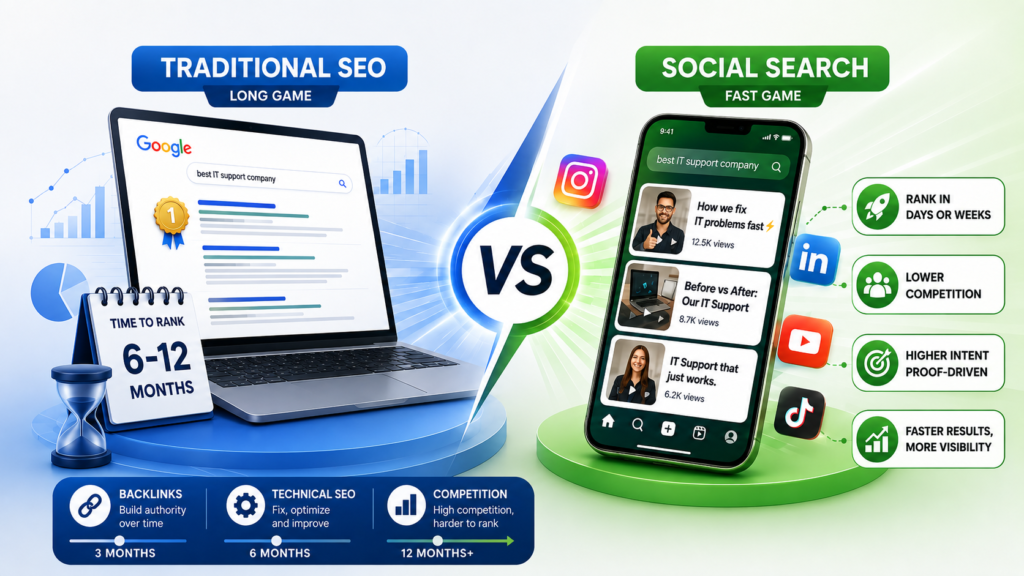
Traditional SEO rewards answers, backlinks, and technical authority, and page-one rankings can take a year. Social search rewards proof, meaning real results, real people, and content that matches how buyers actually phrase questions. It also moves faster, with rankings possible in weeks.
7. What is multi-modal social search?
Multi-modal search means people now search social platforms with voice, photos, and full conversational questions, not just typed keywords. This shift rewards content built around natural, question-style phrases rather than exact-match keyword stuffing.